Fighter Game Environments
3D Environment Design & Spatial Concepts
In the Summer of 2025, I developed two battle arenas as part of CS 467 - Capstone Project at Oregon State University.
Environment 1: Weatherford Hall (Corvallis Campus)
The Weatherford Hall battle arena translates a real campus landmark into a balanced, playable fighter-game arena.
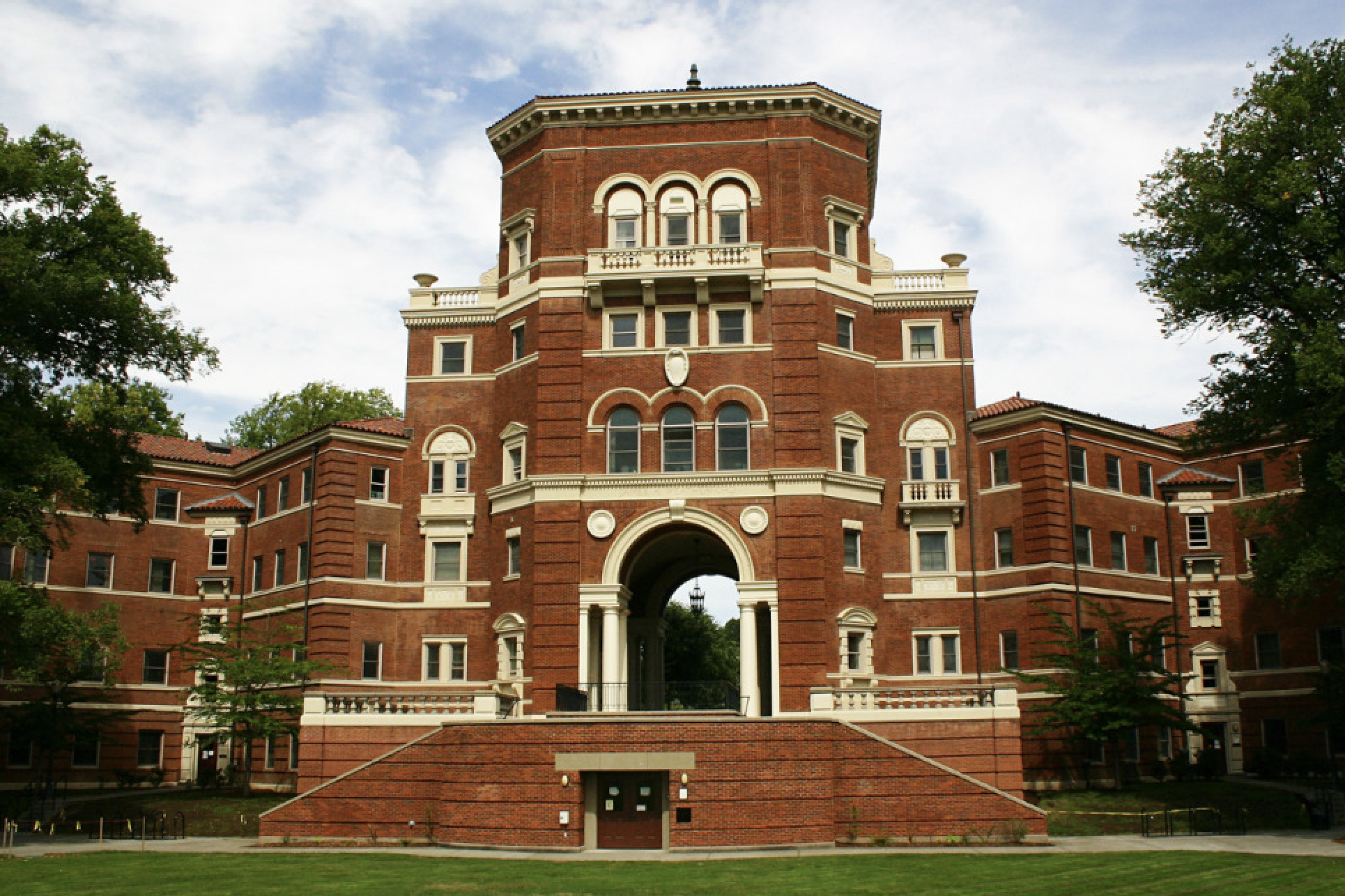
Front View of Weatherford Hall.
Weatherford Hall, a central landmark on the Oregon State University campus, served as the real-world reference for this environment. The goal was to preserve the building’s architectural identity while simplifying geometry for real-time gameplay.
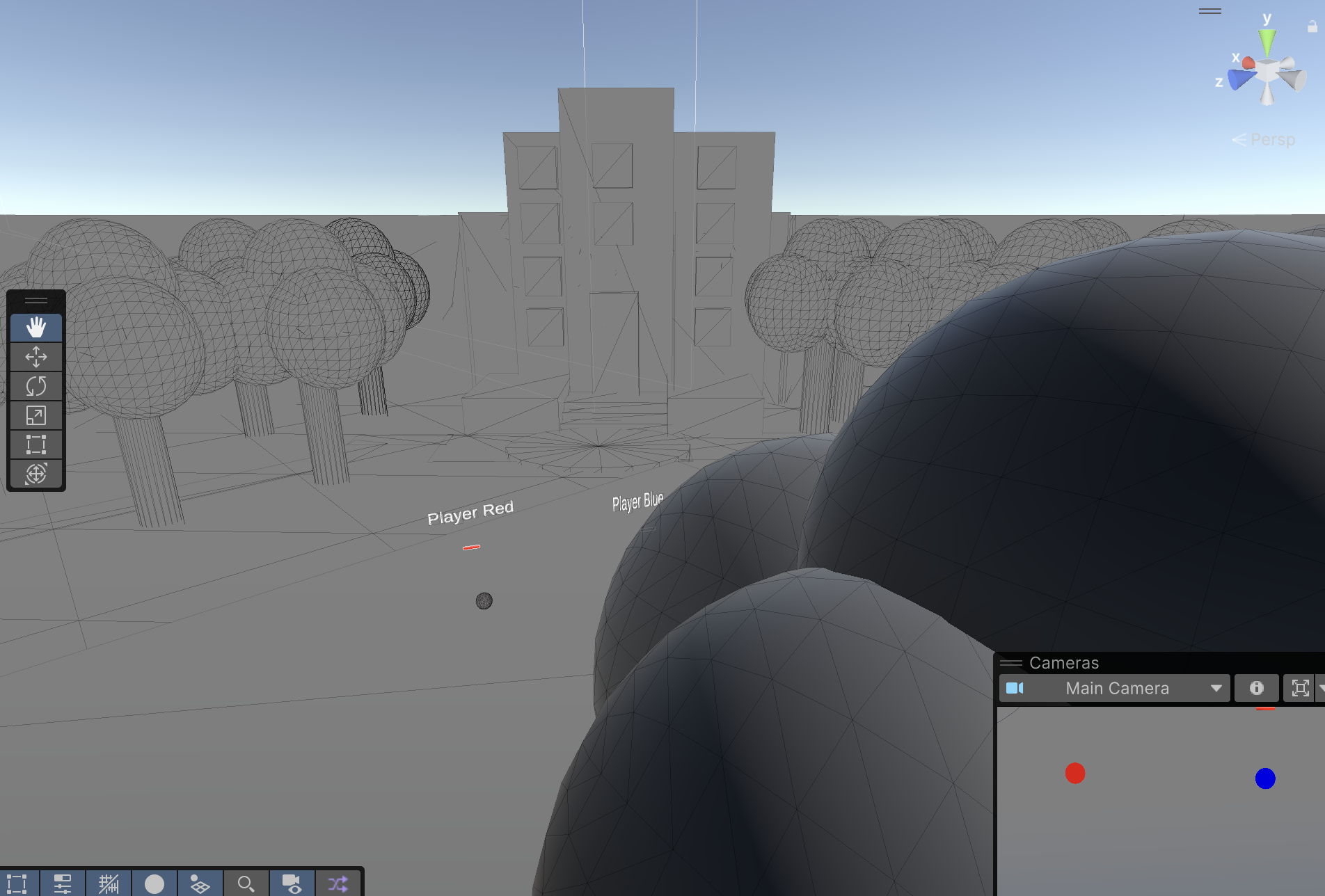
Front View of Weatherford Hall -Wireframe Model.
The front elevation was reduced to core structural forms to maintain visual recognition while optimizing mesh complexity. Decorative details were selectively abstracted to support performance and readability in a combat setting.
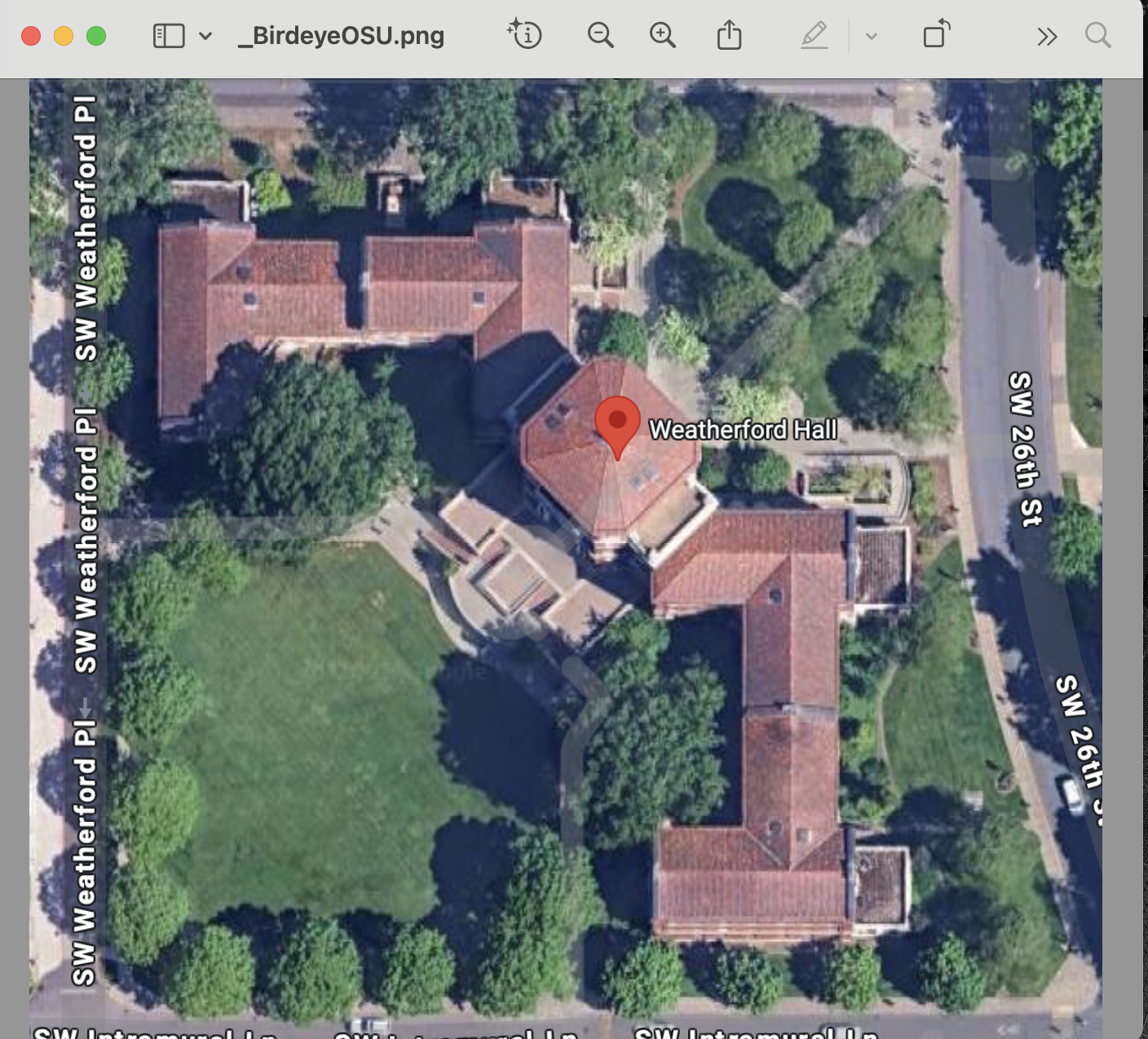
Birdeye’s View of Weatherford Hall.
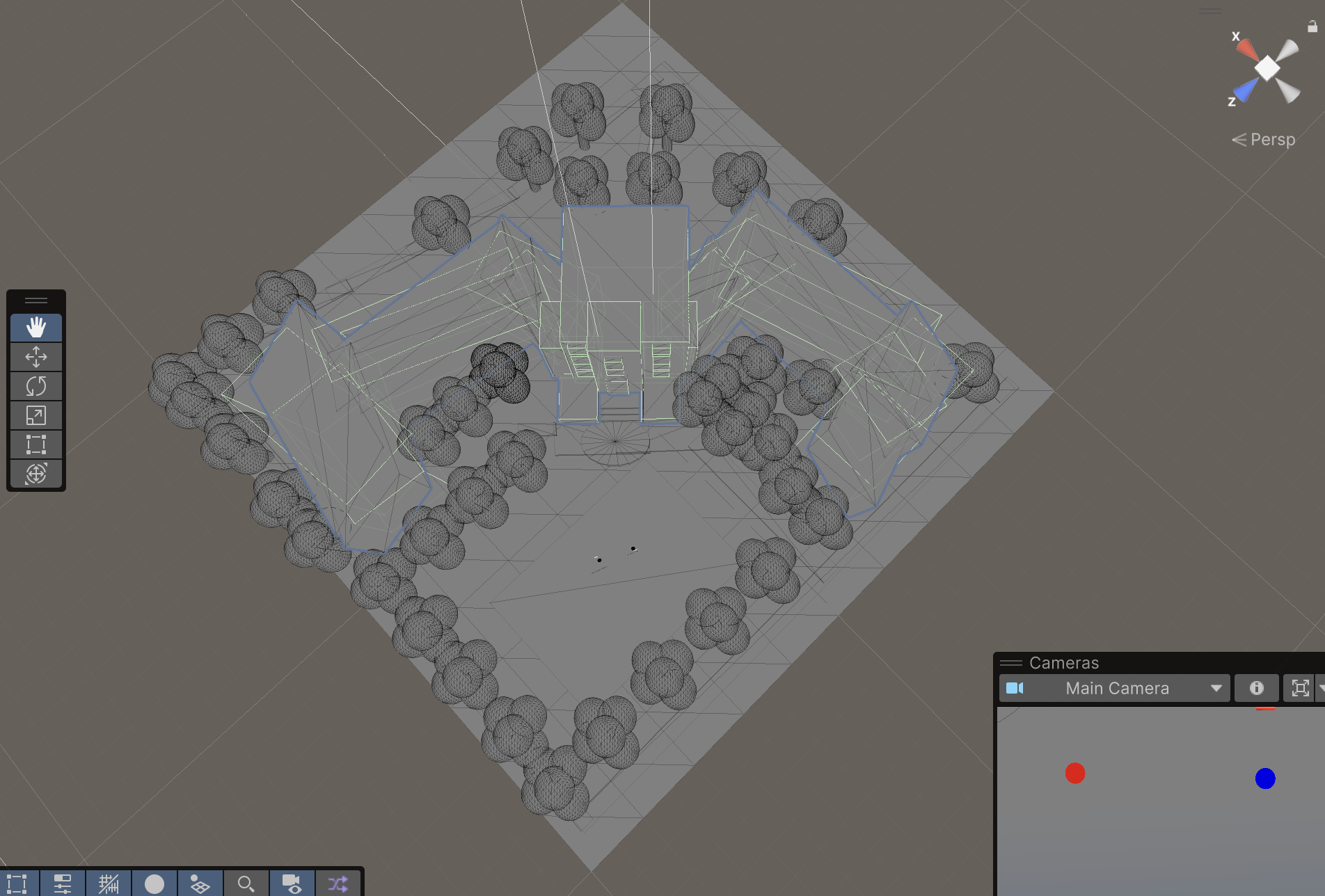
A bird’s-eye satellite view of Weatherford Hall and its surrounding grounds informed the spatial layout of the arena. Pathways, green space, and symmetry were considered to establish natural player boundaries and flow.

Birdeye’s View of Weatherford Hall - Wireframe Model.
The top-down wireframe translates the real campus footprint into a playable arena. Symmetry and clear sightlines were prioritized to ensure fair engagement zones, predictable spacing, and intuitive navigation during combat.
A short in-engine walkthrough demonstrates scale, player perspective, and spatial flow within the environment. This view highlights how real-world reference was adapted into a functional game space while maintaining visual clarity and balance.
Environment 2: Natural Arena
In contrast to the campus environment, this arena explores a fully fictional natural setting designed to emphasize verticality, terrain variation, and environmental separation without reliance on architectural landmarks.
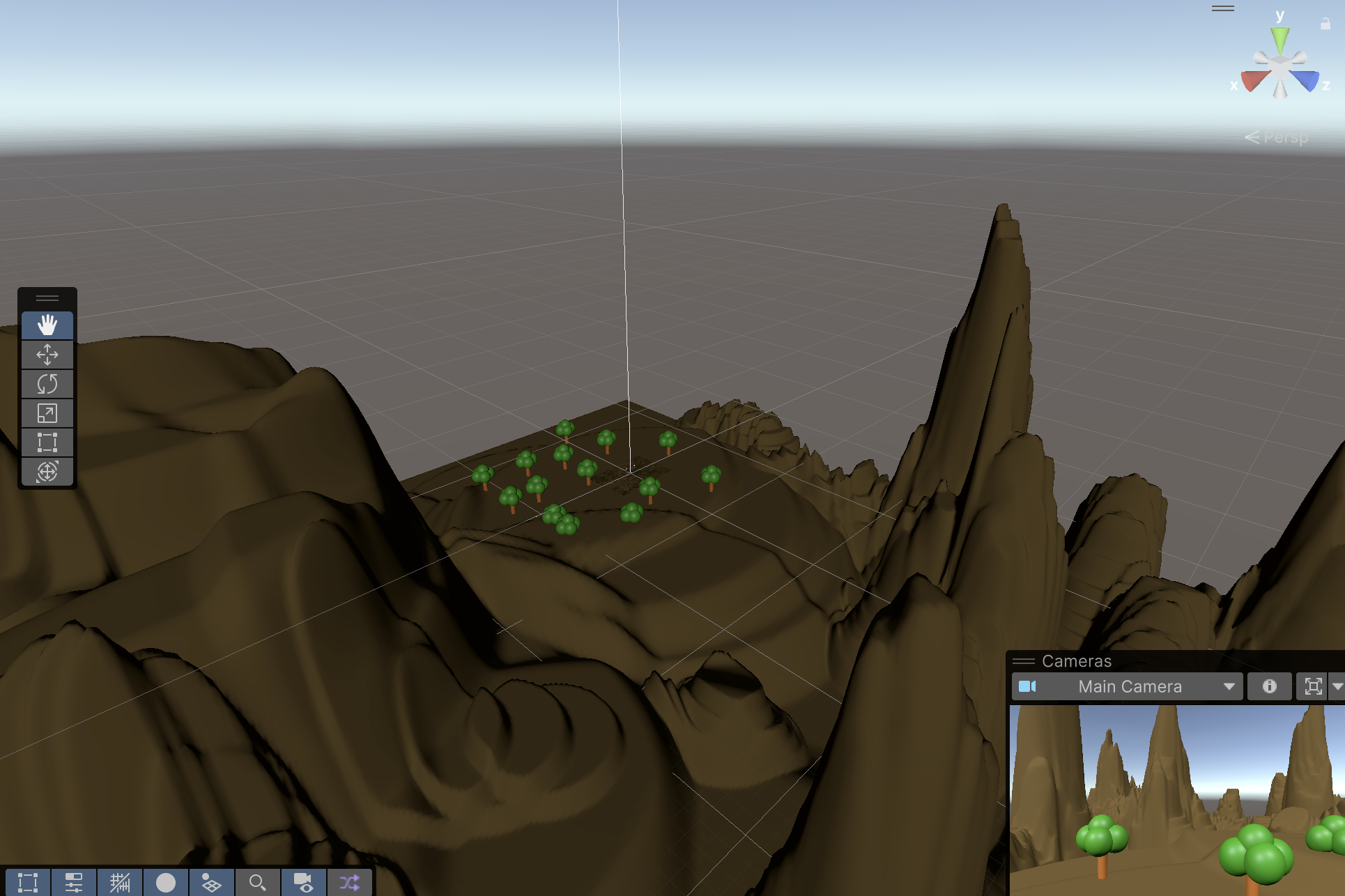
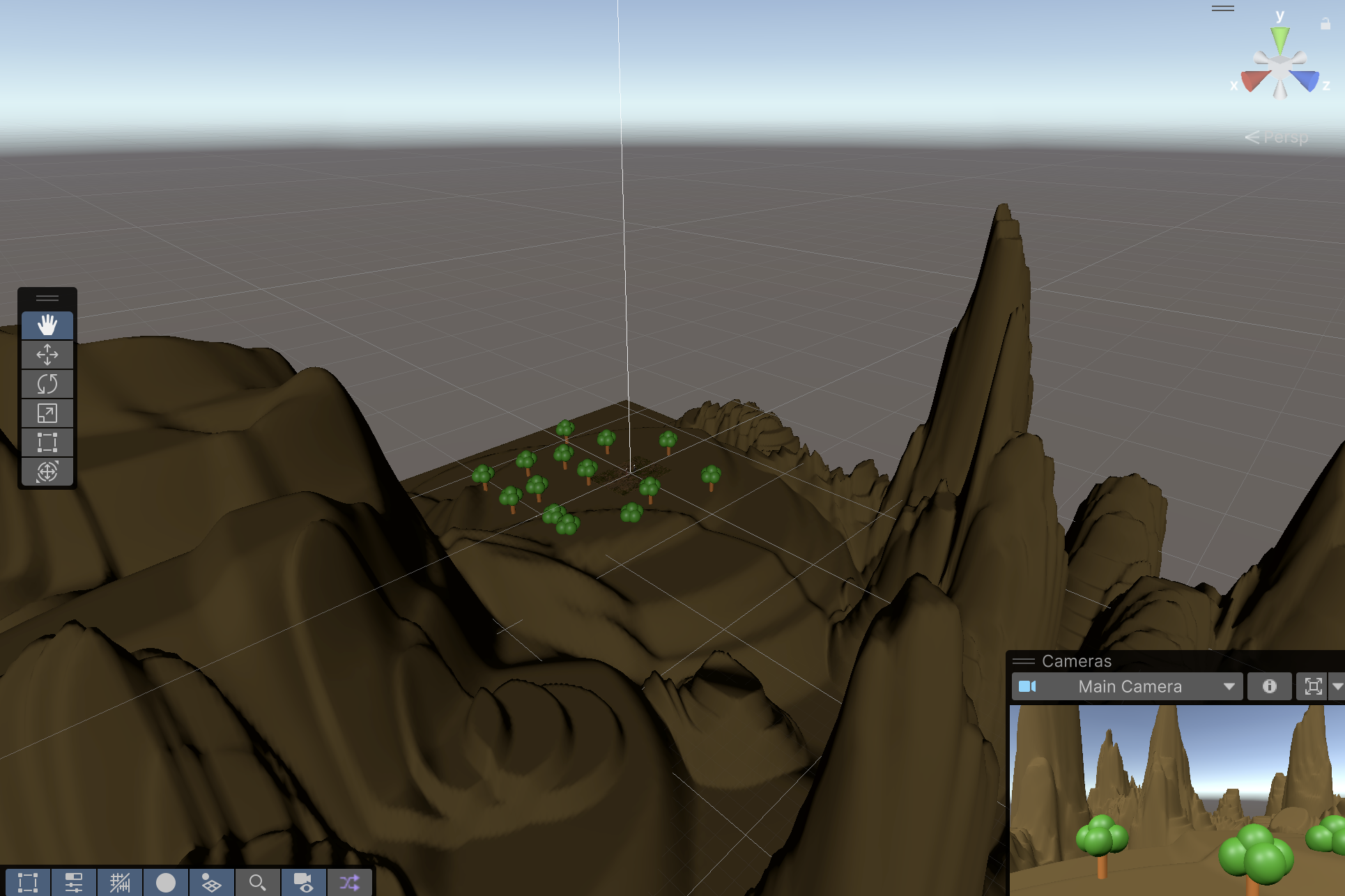
Distance Perspective.
The natural arena was constructed using sculpted terrain, rock formations, and sparse vegetation to create visual depth and strategic movement options. Vertical elements and uneven ground introduce positional variety while maintaining a clear combat plane. I had a lot of fun with this.

Fighter Perspective.
Two fighters positioned within the natural arena to demonstrate scale, player spacing, and sightlines during active combat. The player models were downloadable from Unity’s Asset Store.
I was thankful for the store, because I only had a few weeks to develop this game with my team, and I wanted to spend more time developing the arena.
A 30-second walkthrough highlighting terrain-driven design, elevation changes, and natural boundaries within a fictional fighter-game arena.