My Medical School Journey: Starting From the Beginning
Welcome.
If you’re here, welcome.
This section of my site exists to document my medical school journey as it unfolds. Not as a finished story, and not as a justification, but as a record of how I am moving toward medicine while building a life, a company, and a body of work alongside it.
I am thirty years old. I am not yet in medical school. And yet, this goal has never really left me.
I want to start at the beginning, because context matters.
Early Roots.
I grew up in Louisville, Kentucky, in a Vietnamese refugee family. My extended family worked in nail salons, butcher shops, farms, and small businesses. Medicine was always spoken about with reverence, sometimes as aspiration, sometimes as expectation. Like many children of immigrants, I learned early that success was not optional. It was survival, legacy, and gratitude all wrapped into one.
My family structure during childhood was unconventional. My father was not a consistent presence, and my upbringing included two stepfathers at different stages. The first entered my life during a period of transition, and that relationship concluded relatively early. By the time my second stepfather became part of the family, I was already fourteen and largely self-directed. He worked as a pit boss in the casino industry and offered a steady presence later in my adolescence. Throughout this period, my mother navigated displacement, cultural expectations, and the demands of raising a child whose path did not always align with conventional roles.
School, Identity, and Ambition.
I attended St. John Vianney from pre-kindergarten through early elementary school. When the school closed, one of my clearest childhood memories is not fear or sadness, but confusion. On the final day, a teacher raised her middle finger and gestured it around the room in frustration. As children, we did not understand what it meant. We stood around afterward, comparing fingers, trying to decode something we were not yet equipped to understand.
In the third grade, I transferred to the J. Graham Brown School, a public magnet school. It was a cultural shock. No uniforms. Greater diversity. Students who seemed to know far more about the world than I did. At first, I struggled. Over time, I adapted. I found my voice. I did well.
Between the ages of twelve and fifteen, I read obsessively. Self-help books, identity books, anything that promised clarity. This was the era of Myspace and Tumblr, of hipster, emo, and punk aesthetics, and a growing visibility of androgyny in youth culture.

2009 Freshman Year at J. Graham Brown High School
I explored those environments, but I also recognized early that my circumstances imposed a different set of constraints. Academic excellence mattered to me in a practical, not competitive, sense. Earning straight As was never about validation; it was a form of security and a path toward independence. Academic performance functioned as leverage — the ability to keep options open, move freely, and build a future beyond my immediate surroundings. It was less a measure of status than a means of agency.
Along the way, I absorbed the idea of “fake it until you make it.” I became attentive to what success looked like and how proximity to it might shape my thinking and behavior. My early understanding of Ivy League culture largely came from books and online spaces like Tumblr, where ambition, aesthetics, and academic identity were carefully curated and amplified. At the time, I mistook presentation for substance, believing that if I could learn the language and adopt the image, the confidence and clarity would follow.
That shift began in small, ordinary ways. A girl I liked, an avid equestrian, once told me she preferred “preppy guys.” Around the same time, my aunt advised me to spend time with the smartest students in my class, those who seemed to learn quickly and move with quiet confidence. I took both observations seriously. I studied the aesthetic, adopted the uniform of blazers and khakis, and modeled myself after the image of private prep school students. I was strongly convinced that discipline of appearance might lead to discipline of mind.
Looking back, I may have overdone it. But it gave me structure, focus, and forward motion at a time when I needed all three. In the end, it ultimately carried me where I was trying to go.

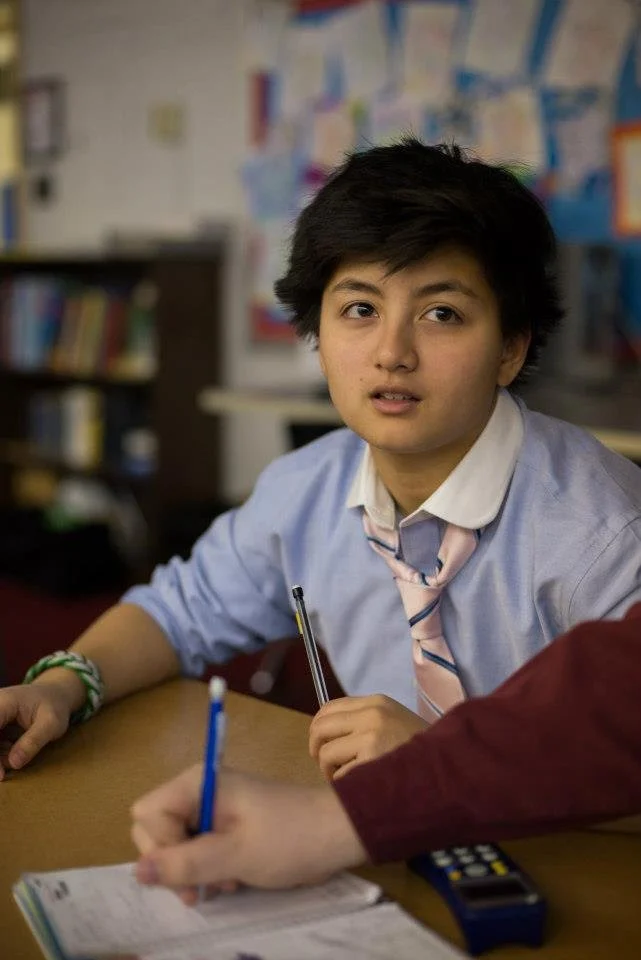
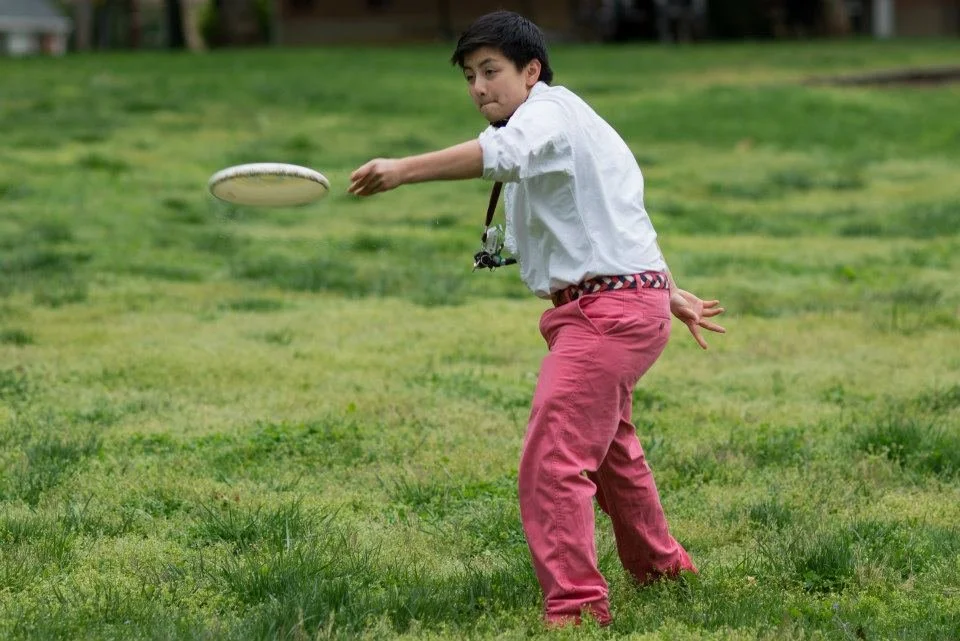
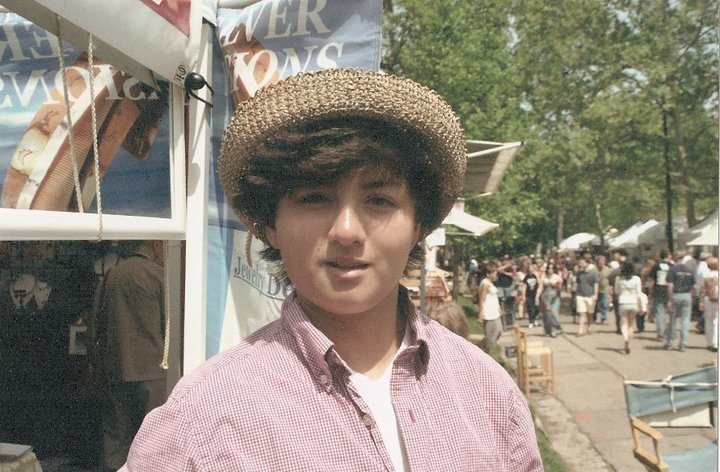
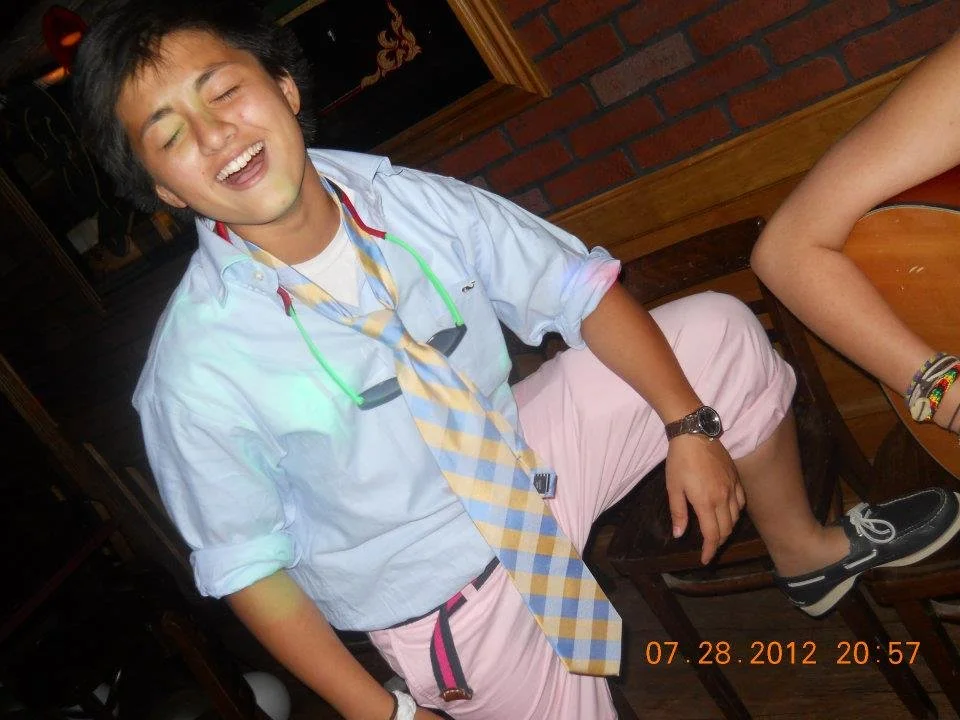
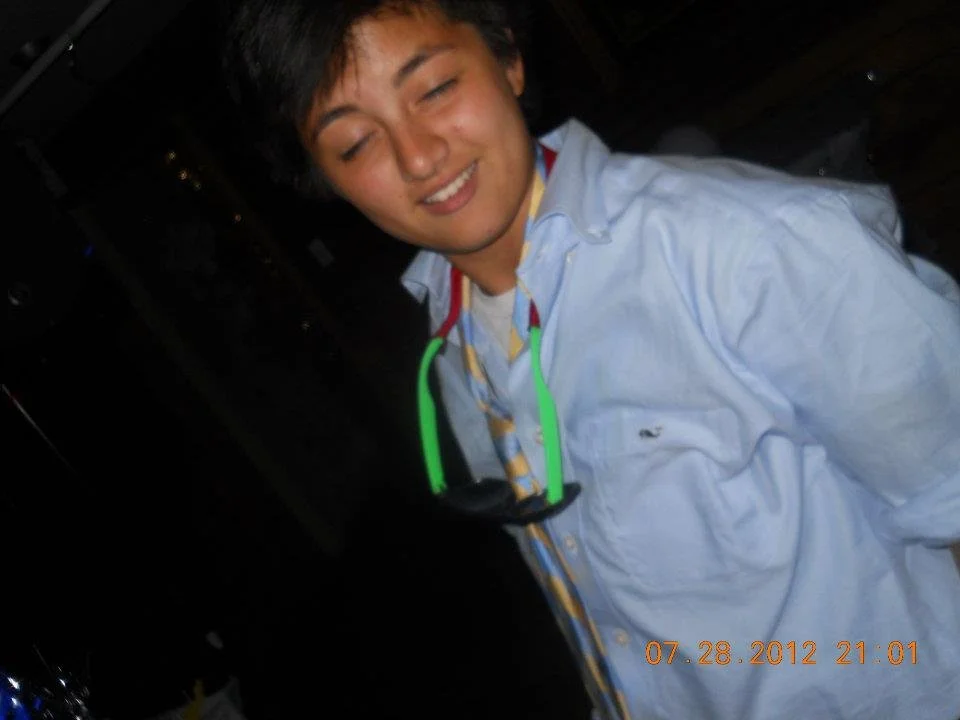
Photos of me in my high school years as I tried to become the “preppy” guy. Photography credits: 1 -3 by William Kolb. Photo 4 by Margo Borders. Photo 5-6 by Cassidy Lea.
At the same time, I was working through questions of identity. I spoke with my mother about this early, using the limited language available to me at the time. I expressed that I was uncomfortable with certain expectations placed on me and felt more aligned with a masculine mode of self-expression and development. Those conversations reflected an attempt to articulate something intuitive rather than fully formed.
With time, I came to understand that different aspects of identity—how one understands oneself and how one is drawn to others—operate independently. I was clear early on about how I wanted to live and be recognized. What took longer to clarify was the nature of attraction itself. I was drawn less to gender than to temperament, often finding myself most connected to people who expressed a gentler, more traditionally feminine energy.
Earlier in adolescence, I lacked the language to make sense of that distinction and defaulted to a narrower, more performative understanding of masculinity. As I grew older, particularly during college at Brown, conversations with peers and exposure to scholarship on gender and sexuality helped me separate performance from preference. What once felt imprecise became intelligible, allowing me to move forward with greater coherence and self-understanding.
When I first spoke with my mother, she assured me that her love for me was unchanged, and I believe that was entirely sincere. What took longer was not care, but understanding—particularly as she navigated her own challenges, shaped by faith, community, and personal history. Over time, those pressures surfaced in our relationship and became part of the context in which I learned to define myself.
That tension ultimately proved formative. It pushed me toward structure, discipline, and measurable progress at a moment when I needed direction. I learned early that when affirmation was inconsistent, effort was reliable. Through sustained work, I graduated high school as valedictorian with a 4.3 GPA. The process was not always comfortable or polished, but it was deliberate and effective.
Ivy League, Freedom, and the Many Detours.
In 2012, I was admitted to Brown University and Duke University, and elected to attend Brown.
Brown gave me something I had never experienced before: freedom. Academic freedom. Identity freedom. The freedom to explore who I was outside of expectations and my inherent ambition.
I did not flourish as a pre-med student. I flourished as a person.
I joined a co-ed fraternity, Zeta Delta Xi. It felt safer and more expansive than traditional spaces. I committed fully to the experience and, in doing so, built confidence, social fluency, and a stronger sense of self. I hosted events, organized large social functions, and eventually held leadership roles including sergeant at arms, rush chair, social chair, and vice president.
The following photos capture a few moments from that period of growth, leadership, and self-formation.
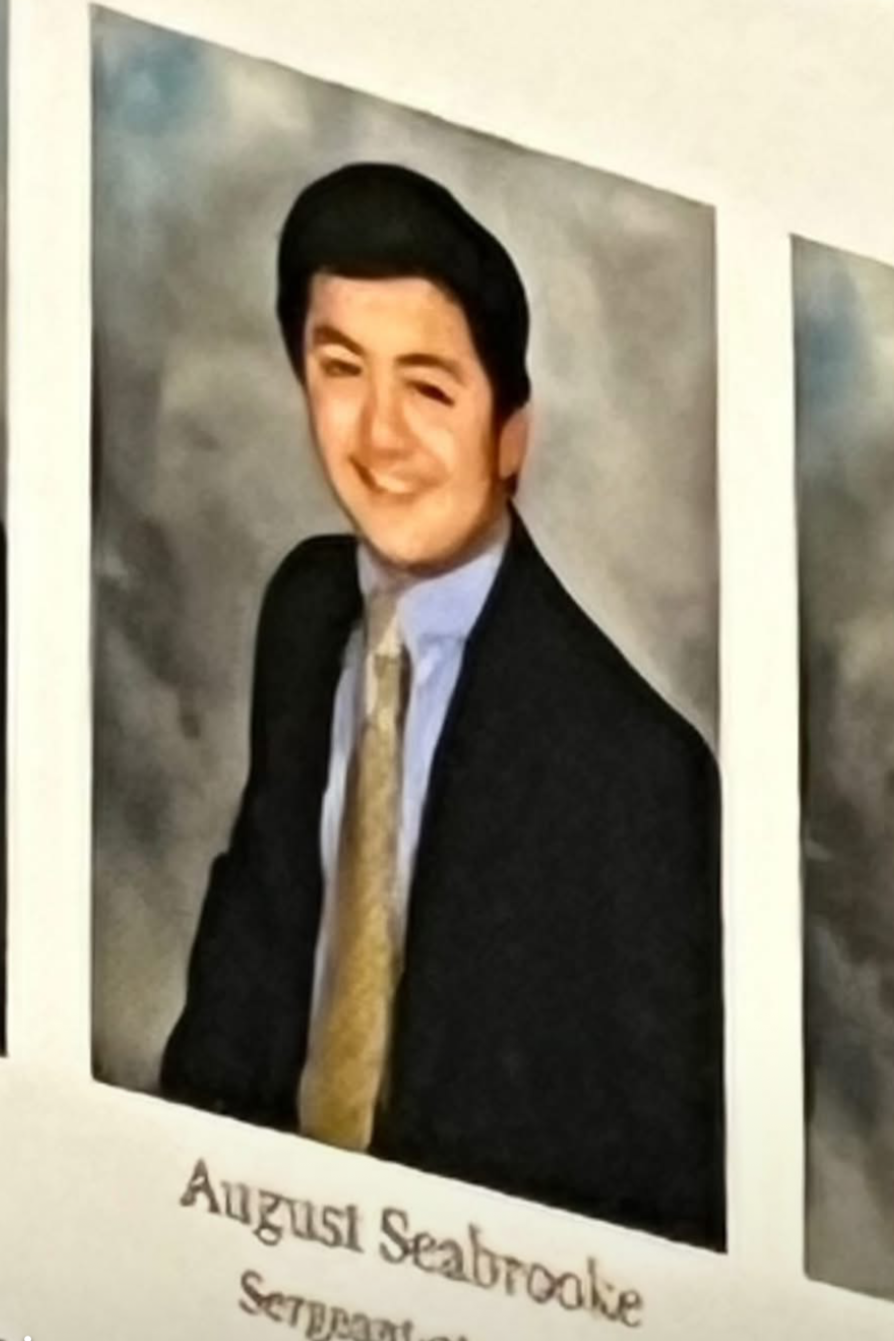
Sophomore year at Brown University, serving as Sergeant At Arms of Zeta Delta Xi.
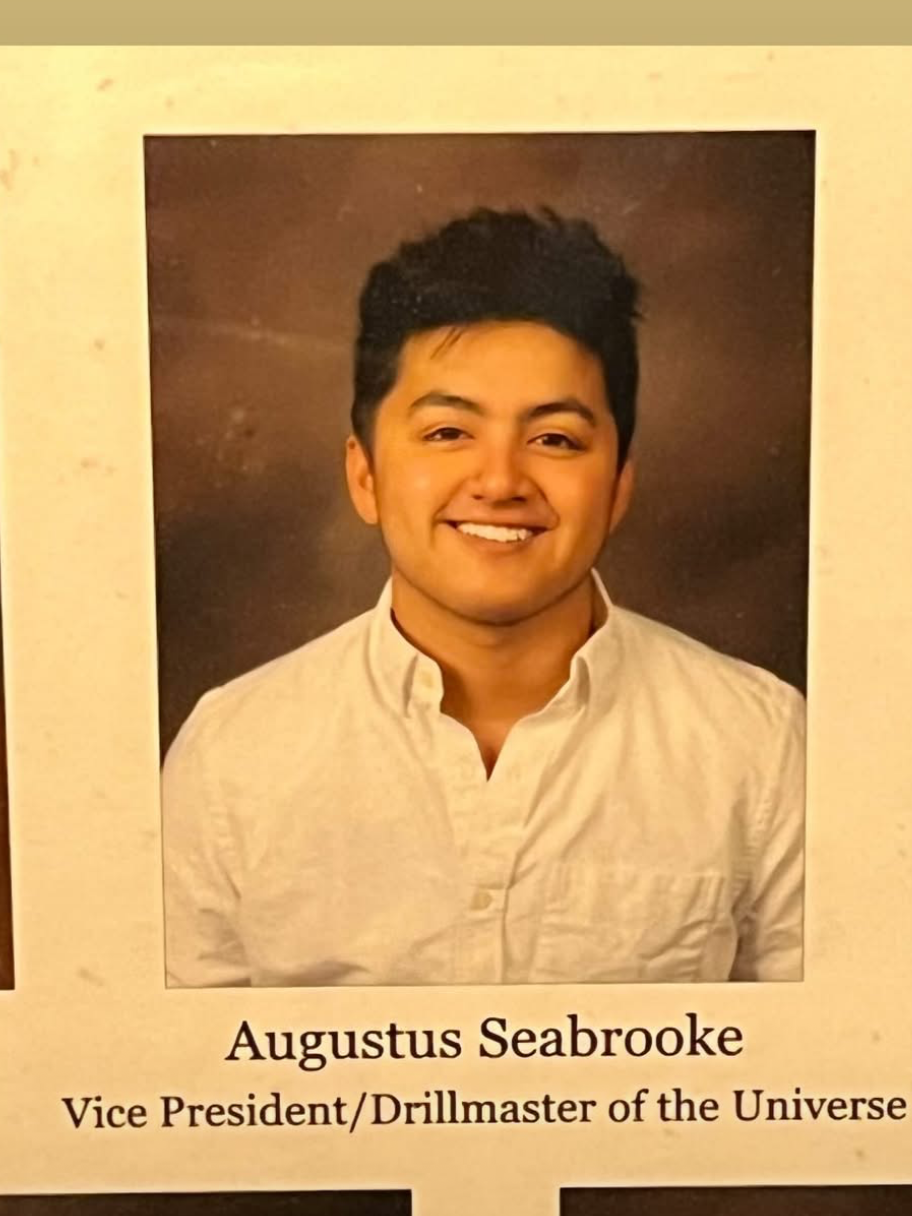
Junior at Brown University, serving as Vice President of my fraternity
Academically, my path was nonlinear. I moved between biology and engineering, finance and economics, computer science, art, and eventually back to biology. During this time, I was navigating family dynamics, learning how to support myself financially, and expanding my sense of what a meaningful career could look like. That realization was liberating, and destabilizing.
I did not complete my medical school prerequisites during that period.
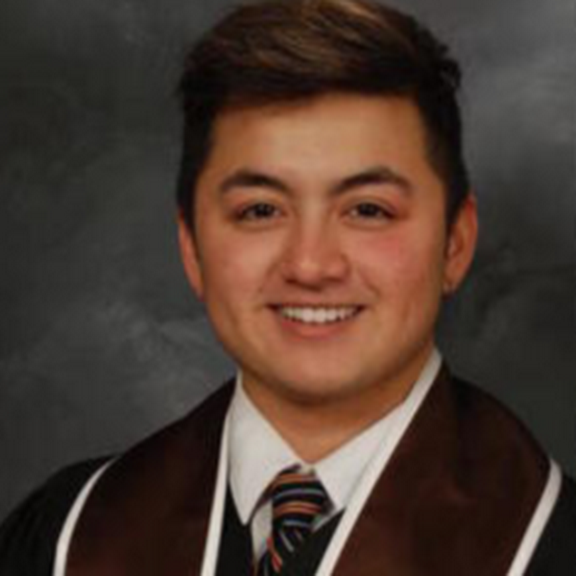
Graduation at Brown University, marking the completion of my undergraduate studies.
Returning Home and Starting Again.
After college, I returned to Louisville following a research coordinator role in Boston. I enrolled in a second bachelor’s degree in computer science at Oregon State University. Shortly after, COVID arrived.
The world slowed abruptly. Plans were interrupted. I helped my family. Like many people, I learned what it meant to place ambition on hold without abandoning it entirely.
During this period, I was also exposed to complexity beyond academics. I served on the board of the Louisville Pride Foundation, which deepened my understanding of community governance, substance use, and the long-term effects of trauma in real-world settings. At the same time, I assumed increasing responsibility within my family’s business, gaining firsthand experience in operations, finance, and decision-making under pressure.
I also served, and continue to serve, as President of the Brown University Club of Kentucky, connecting with leaders across healthcare, business, law, and civic life in Louisville. As a scholarship student at an elite institution, this role provided insight into how opportunity circulates and how access is built through service and trust rather than entitlement.
During this period, my family encountered several serious health and personal crises. My brother was hospitalized in a life-threatening coma due to COVID, an experience that underscored the fragility of health and the importance of reliable support systems. Concurrently, I was navigating a demanding personal relationship that required me to clarify boundaries around responsibility, finances, and long-term sustainability. Together, these experiences sharpened my understanding of stress, resilience, and how adversity shapes judgment and behavior.
I completed my computer science degree online at Oregon State University over five years while managing these responsibilities and supporting my family through periods of transition. That experience strengthened my capacity for sustained effort and deepened my appreciation for the resilience my mother had long demonstrated as a young immigrant parent.
I also briefly explored roles in asset management and software quality assurance before stepping away to realign with my longer-term goals.
Through all of this, the desire to practice medicine remained.
Where I Am Now
Today, I am thirty years old with two bachelor’s degrees, a BA in Biology from Brown University and a BS in Computer Science from Oregon State University. I am currently pursuing advanced training through a part-time Master’s program in Computer Science at Georgia Institute of Technology and a full-time Master’s program in Physiology at the University of Louisville.
I have completed biochemistry and am actively working toward the remaining prerequisites, including Physics I, Physics II, and Organic Chemistry II. I am preparing for the MCAT and rebuilding clinical exposure through shadowing, volunteering, and research.
I am exactly where I am, and I am continuing the work deliberately and without shortcuts.
————
This page exists as documentation. A record of effort, reflection, and persistence as I move forward.

Fall of 2025, Tex Haus, Louisville, KY
A transitory period in adulthood.